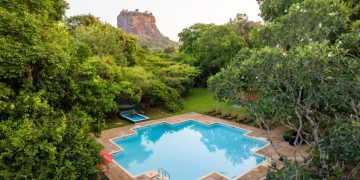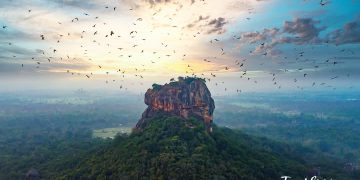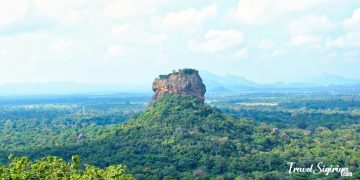
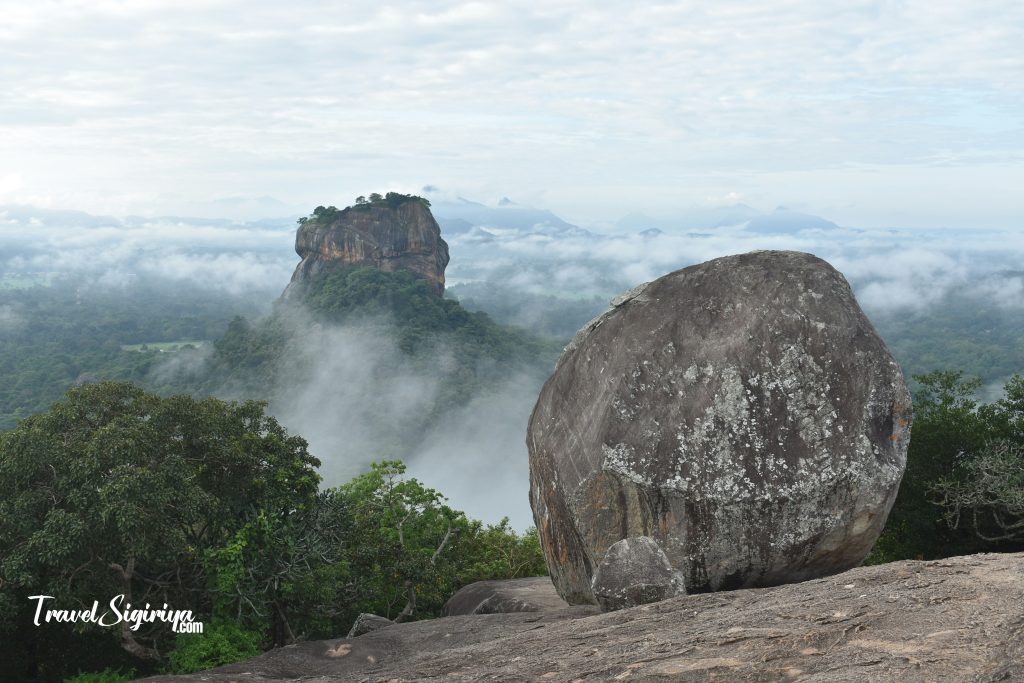
Rising nearly 200 meters above the jungle plains of central Sri Lanka, Sigiriya Rock is one of the most extraordinary landmarks in South Asia.
From a distance, the rock looks almost impossible — a massive vertical column of stone crowned with ancient ruins. Up close, it becomes even more impressive. The sheer scale, the steep walls, and the carefully designed gardens at its base make it clear that this was never an ordinary royal residence.
Sigiriya is not just a hike. It is a journey through history, architecture, and engineering that dates back more than 1,500 years.
If you are planning to climb Sigiriya Rock in 2026, this guide explains exactly what to expect, how difficult the climb is, when to go, and how to make the most of your visit.
What Is Sigiriya Rock?
Sigiriya, also known as Lion Rock, was built in the 5th century by King Kashyapa. After taking control of the throne, he constructed his royal palace on top of this natural rock fortress, transforming it into a heavily fortified citadel.
The site includes landscaped water gardens, defensive boulder formations, fresco paintings, a polished mirror wall, and palace ruins at the summit.
Today, Sigiriya Rock is recognized as a UNESCO World Heritage Site and is considered one of Sri Lanka’s most important historical attractions.
Unlike many ancient ruins, Sigiriya combines urban planning, art, landscaping, and defensive strategy in one dramatic location.
What To Expect Before The Climb Begins
The climb does not begin immediately with stairs.
Visitors first pass through large landscaped gardens at the base of the rock. These water gardens are geometrically arranged, with long stone pathways and shallow pools designed with impressive symmetry.
The layout feels surprisingly modern. The hydraulic systems built in the 5th century still function during the rainy season, when fountains can still operate using ancient water pressure systems.
Walking through this section offers a gradual introduction to the site. The rock towers above, growing larger as the path leads closer to its base.
This first part is flat and easy, giving visitors time to adjust before the real climb begins.
How Difficult Is The Sigiriya Rock Climb?
The Sigiriya Rock climb involves approximately 1,200 steps from the base to the summit.
The difficulty level is moderate. It does not require technical climbing skills, but it does require endurance and steady pacing.
The staircases vary throughout the climb. Some sections consist of wide stone steps carved directly into the rock. Other areas use narrow pathways between boulders. Near the top, modern metal staircases are attached to the vertical rock face.
Most visitors complete the ascent in 45 to 60 minutes, depending on fitness level and crowd conditions.
The climb is manageable for most people in average physical condition. However, those with severe fear of heights may find the final staircase challenging, as it is exposed and steep.
Taking breaks along the way makes the climb significantly easier. There are multiple platforms and shaded areas where visitors can rest.
The Boulder Gardens: Natural Defense
After the water gardens, the path moves into the boulder gardens.
This section winds through enormous natural rock formations that were incorporated into the fortress design. Some of these boulders were used as guard points, while others were converted into meditation caves.
The shaded pathways and uneven terrain make this section feel more like a forest trail than a historical monument. It is a gradual incline, allowing the body to warm up before reaching the steeper staircases.
The use of natural rock formations as defensive barriers demonstrates the strategic planning behind Sigiriya’s construction.
The Frescoes: Ancient Art In The Sky
One of the most remarkable features of Sigiriya is the fresco gallery located halfway up the rock.
These paintings depict elegantly dressed women, often believed to represent celestial maidens or members of the royal court. The artwork is more than 1,500 years old, yet the colors remain vivid.
The frescoes are located inside a sheltered pocket of the rock face, protected from direct weather exposure.
Photography is not allowed inside this section in order to preserve the paintings. Visitors must remove hats and maintain silence.
This part of the climb offers a rare glimpse into ancient Sri Lankan artistry and court culture.
The Mirror Wall
Continuing upward, visitors walk alongside the famous Mirror Wall.
This wall was once polished so smoothly that it reflected like a mirror. Ancient inscriptions written by visitors between the 6th and 14th centuries can still be seen carved into the surface.
These inscriptions are among the oldest examples of recorded visitor commentary in the world.
The Mirror Wall adds another layer to the experience — it is not only a monument, but also a place that has attracted travelers for over a thousand years.
The Lion’s Paw Terrace
The most iconic section of the climb is the Lion’s Paw Terrace.
Two enormous lion paws carved from brick and plaster stand at the base of the final staircase. Originally, a full lion structure formed the gateway to the palace at the summit. Today, only the paws remain.
This is where the fortress earns its nickname, Lion Rock.
Standing here gives a sense of the scale and grandeur intended by King Kashyapa. The final ascent begins between these massive carved paws.
The Final Staircase
The last section of the climb consists of steep metal stairs attached to the rock face.
This portion is exposed and can feel intimidating for those uncomfortable with heights. However, the structure is secure and maintained regularly.
The final climb is shorter than it appears from below.
Within a few minutes, the summit comes into view.
What Awaits At The Summit
The summit of Sigiriya Rock is wider than expected.
Visitors find extensive ruins of the royal palace, including brick foundations, throne platforms, and large water pools carved into the stone.
The engineering required to transport materials to this height over 1,500 years ago remains impressive.
The panoramic views are one of the main highlights. Dense jungle stretches in every direction. Lakes shimmer in the sunlight. On clear days, distant mountain ranges are visible along the horizon.
The elevation creates a strong breeze, offering relief from the heat below.
Spending time at the summit allows visitors to absorb both the history and the natural beauty of the region.
Best Time To Climb Sigiriya Rock
The best time to climb is early morning, shortly after opening hours.
Temperatures are cooler, the lighting is softer, and crowds are smaller. Midday heat can be intense, especially during the dry months of March and April.
During the October–November transition season, mornings also reduce the chance of afternoon rain showers.
Sunset climbs are not typically allowed, so morning remains the most practical and comfortable option.
How Long Should You Plan For The Visit?
A full visit to Sigiriya typically takes between two and three hours.
This includes time to walk through the gardens, climb to the summit, explore the ruins, and descend.
Visitors interested in photography or history may wish to allow additional time.
Descending generally takes less time than ascending, but care should be taken, especially if steps are wet.
What To Wear And Bring
Comfortable footwear with good grip is strongly recommended.
Lightweight clothing is ideal due to the tropical climate. Bringing water is essential, as there are no refreshment stalls along the climb itself.
Sunscreen and a hat are useful during sunny months. Large backpacks are unnecessary and can make the climb more tiring.
Sigiriya vs Pidurangala Rock
Located nearby is Pidurangala Rock, another popular climb.
Pidurangala offers a more rugged and natural hiking experience and provides one of the best views of Sigiriya Rock itself.
However, Sigiriya offers historical structures, frescoes, and UNESCO recognition. The experience is more structured and historically significant.
Many travelers choose to climb both for different perspectives.
Is Sigiriya Rock Worth Visiting?
Sigiriya stands out because it combines multiple experiences in one location.
It is a fortress.
It is an art gallery.
It is an ancient city.
And it is a viewpoint over central Sri Lanka.
Few destinations offer this level of variety within a single climb.
For travelers exploring central Sri Lanka, visiting Sigiriya Rock is one of the most rewarding and memorable activities available.