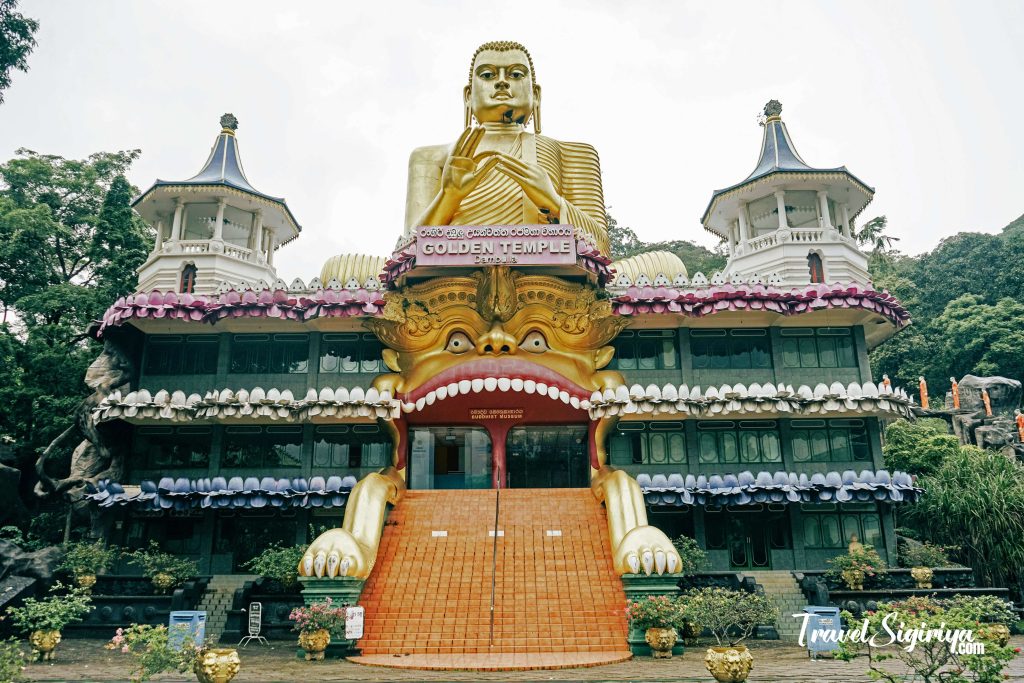
Just a short drive from Sigiriya, another one of Sri Lanka’s great cultural treasures waits on a rocky hill above the plains.
Many travelers come to the region for Sigiriya Rock, but those who also visit Dambulla Cave Temple often leave feeling they discovered something equally memorable.
From the outside, Dambulla looks simple enough — a huge stone outcrop rising from the countryside, with a temple complex hidden near the top. But inside the caves are centuries of history, rows of Buddha statues, colorful murals, and one of the most atmospheric religious sites in Sri Lanka.
It is peaceful, artistic, and surprisingly grand once you step inside.
If you are staying in Sigiriya, visiting Dambulla is one of the easiest and most rewarding day trips you can make.
Why Visit Dambulla Cave Temple?
Some attractions impress immediately.
Others reveal themselves slowly.
Dambulla belongs to the second group.
The climb up the hill is calm and scenic, with monkeys moving through the trees and wide countryside views opening behind you. Then the cave entrances appear beneath the giant rock face.
Once inside, the experience changes completely.
Dark stone chambers open into temple rooms filled with statues, painted ceilings, incense, and centuries of devotion. The contrast between the rugged natural caves and the refined artwork makes the place unforgettable.
For many visitors, Dambulla becomes one of the quiet highlights of a Sri Lanka trip.
What Is Dambulla Cave Temple?
Dambulla Cave Temple is one of the best-preserved cave temple complexes in Asia and a UNESCO World Heritage Site.
The caves have been used as a sacred place for over two thousand years. Over time, kings and patrons added statues, paintings, and temple features inside the natural rock chambers.
Today, visitors can explore several cave temples containing dozens of Buddha images, historic murals, and religious artwork spread across walls and ceilings.
It is both a living temple and a historical monument.
That combination gives the site a special feeling — not frozen in the past, but still meaningful in the present.
The Walk Up To The Temple
Part of the charm of Dambulla is the approach.
The path climbs gradually up the rock through shaded areas and open sections with views over the surrounding plains. Depending on the time of day, the air may be warm, but the walk is manageable for most visitors.
Along the way, monkeys often watch from walls and trees, hoping visitors are carrying snacks.
As you climb higher, the landscape stretches wider behind you. Forest patches, villages, distant lakes, and low hills make central Sri Lanka feel broad and peaceful.
By the time you reach the temple caves, the journey already feels worthwhile.
Inside The Cave Temples
This is where Dambulla truly stands out.
Several separate caves line the rock face, each containing its own arrangement of statues and paintings. Some are intimate and quiet, while others feel surprisingly grand.
Inside one chamber, a reclining Buddha stretches along the cave wall. In another, rows of seated Buddhas face outward beneath richly decorated ceilings. Elsewhere, statues of kings and guardians stand among religious imagery.
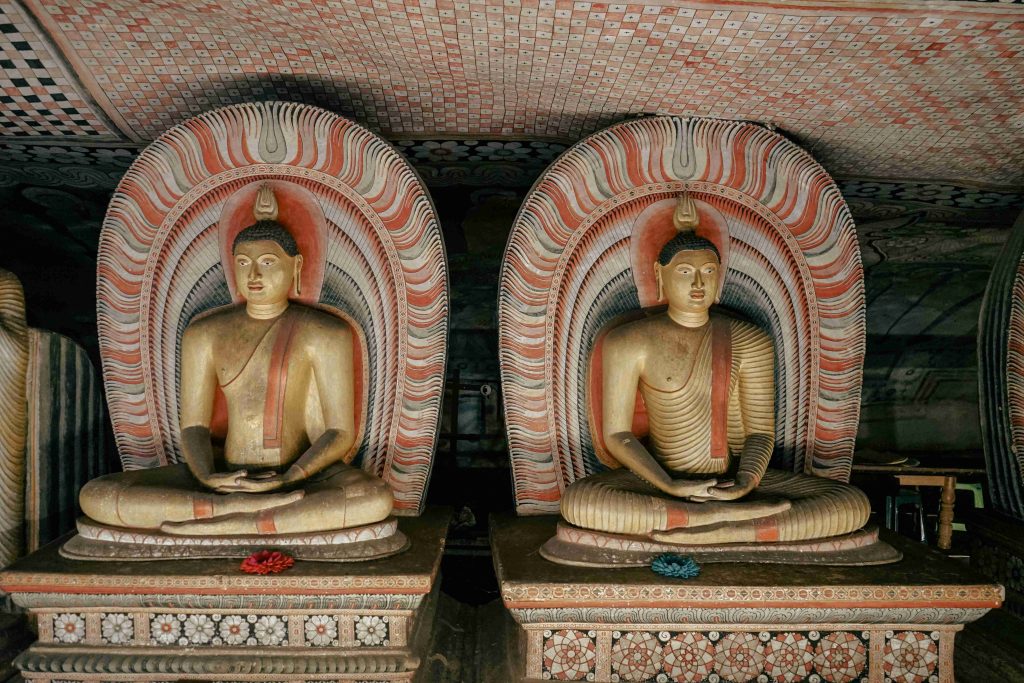
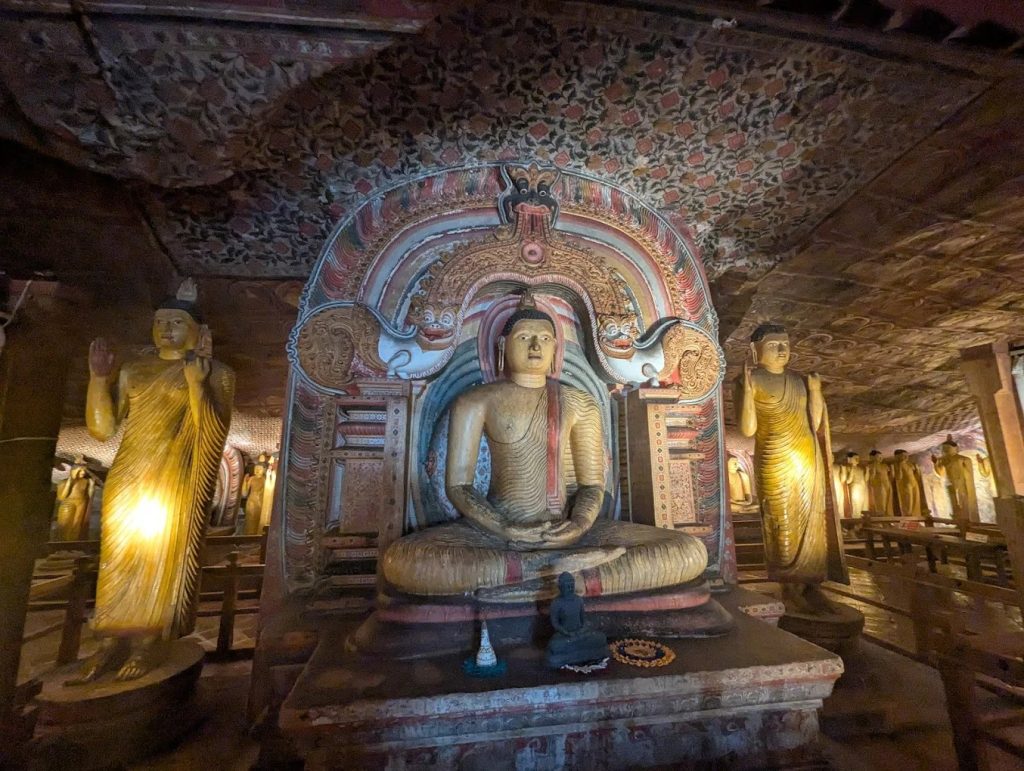
The rock ceilings curve naturally overhead, yet nearly every surface has been transformed with color and design.
Even travelers who have visited many temples often find these interiors unique.
The caves feel ancient, cool, and still alive with spiritual presence.
The Murals And Artwork
One of the most remarkable features of Dambulla is the amount of preserved artwork.
Instead of isolated paintings, entire walls and ceilings are covered with patterns, floral designs, scenes from Buddhist tradition, and historical imagery.
The details reward slow observation.
From a distance, the ceilings appear decorative and elegant. Up close, the precision becomes more impressive.
Because the caves are naturally sheltered, much of the artwork has survived through generations.
For visitors interested in photography, culture, or design, this alone makes the visit worthwhile.
The Atmosphere
Some temples feel crowded or hurried.
Dambulla often feels calmer.
Shoes are removed before entering, voices naturally lower, and people move more slowly through the chambers. The cool stone air contrasts with the warmth outside.
There is a sense of age here, but also peace.
Even if you are not especially interested in religion or history, the atmosphere tends to leave an impression.
Views From The Top
Before leaving, it is worth taking time to enjoy the hilltop setting.
From around the temple area, wide views stretch over central Sri Lanka. Palm trees, scattered villages, distant greenery, and open sky create a calm backdrop to the historic site.
On a clear day, the scenery alone can justify the climb.
Many visitors linger here a little longer than planned.
How Long Do You Need?
Most travelers spend around two hours at Dambulla.
That usually includes:
The walk up and down
Exploring the cave temples
Taking photos
Enjoying the viewpoints
Those interested in history or architecture may want longer.
Because it is close to Sigiriya, it fits easily into half a day without feeling rushed.
Best Time To Visit
Morning and late afternoon are usually the most comfortable times to visit.
The climb is cooler, the light is softer for photos, and the atmosphere tends to feel more relaxed.
Midday can be hot, especially during dry months.
If you are staying in Sigiriya, a morning temple visit followed by lunch and a quiet afternoon works very well.
What To Wear
As Dambulla is an active religious site, respectful clothing is recommended.
Shoulders and knees should be covered.
Shoes are removed before entering temple interiors, so simple footwear that is easy to remove can be helpful.
The ground outside may feel warm under strong sun.
Dambulla Or Sigiriya?
The truth is that they complement each other.
Sigiriya Rock offers dramatic views, fortress ruins, and one of Sri Lanka’s most iconic landmarks.
Dambulla Cave Temple offers sacred caves, preserved murals, and a quieter cultural atmosphere.
If time allows, visiting both creates a fuller picture of the region’s history.
Easy Day Trip From Sigiriya
One reason Dambulla is so popular is convenience.
Travelers staying in Sigiriya can reach the temple easily, making it one of the best nearby excursions. It works well as a relaxed half-day trip between bigger activities like climbing Sigiriya Rock or going on safari.
Many visitors choose Sigiriya as their base, then explore Dambulla from there.
That usually gives the best mix of peaceful accommodation and easy sightseeing access.
Is Dambulla Cave Temple Worth Visiting?
Absolutely.
It may not receive the same global attention as Sigiriya, but many travelers are surprised by how memorable it becomes.
The cave interiors are beautiful, the setting is dramatic, and the atmosphere feels genuine rather than staged.
For anyone visiting central Sri Lanka, Dambulla is far more than an optional stop.
It is one of the cultural highlights of the region.